
A palm at the entry, a row along the drive, tropical beds around the pool. Lush plantings are a big part of what makes a Florida yard feel finished, but sandy soil and summer heat are hard on anything new.
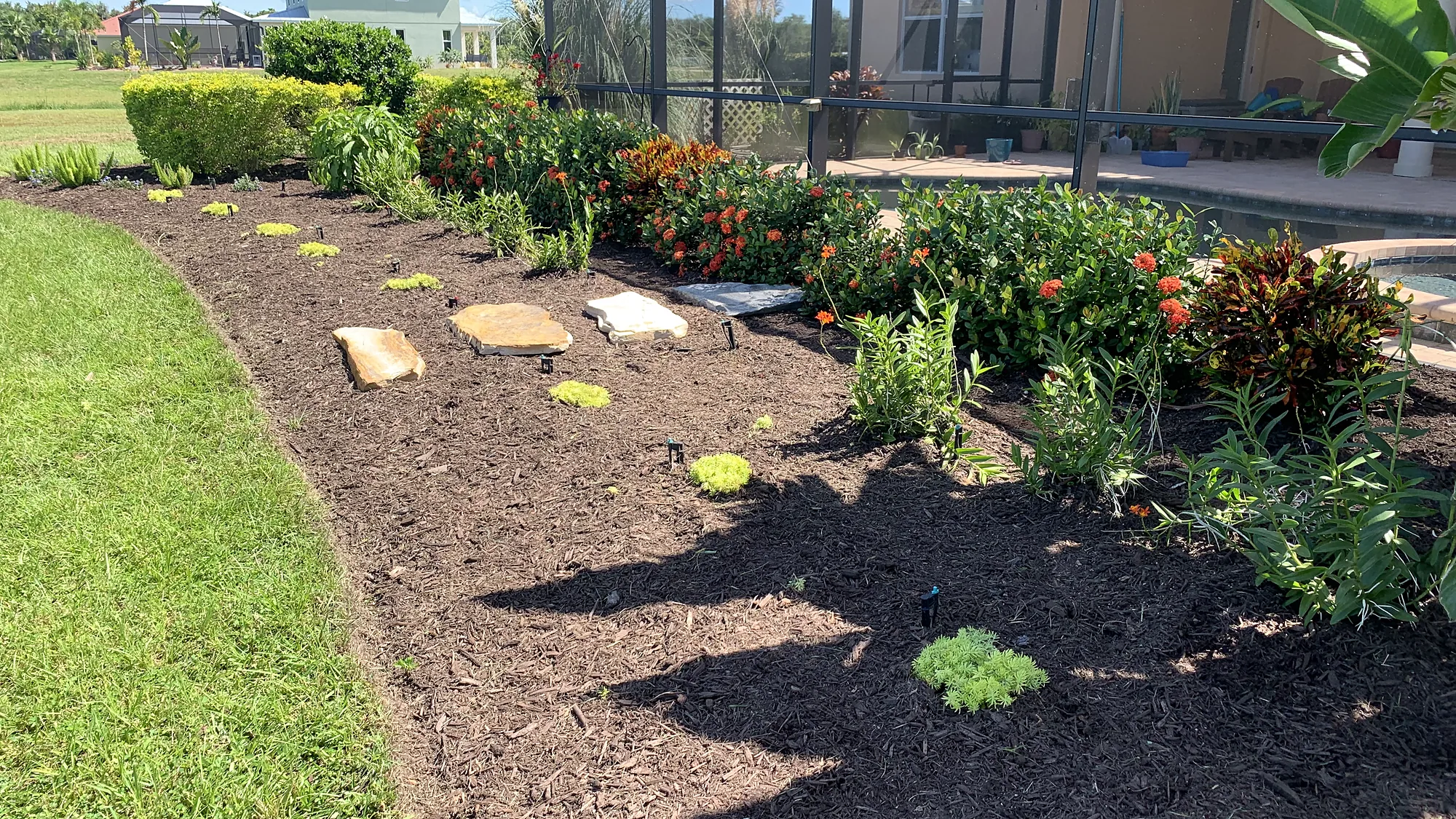
Match Each Plant to Its Spot
Every spot in a yard is different: full sun or shade, wet or dry, open or tight against the house. Placement starts with light, soil, moisture and the space each plant needs as it grows, so it fits the spot now and years from now.
Set It at the Right Depth in Prepared Soil
Sandy ground drains fast. Each plant is set at the right depth in prepared soil so it gets a good start instead of drying out or settling too low.
Plan the Water Before Planting Day
New plants need steady water while they root in. If the yard has no system that reaches the new beds, a new irrigation system with separate lawn and bed zones can go in as part of the project.
Think About Mature Size
Palms and shade trees grow. Placement should account for mature size and the distance from the house, pool and drive. Larger palms and trees such as live oaks are moved and set with loaders when they are too heavy to place by hand. See tree planting.
Finish the Bed So It Looks Complete
Rock, boulders and mulch are what make a new bed look finished. Rock and boulders hold their look for years; mulch gives a softer finish, and many designs use both.
Planting questions
Which plants suit Florida sun and sandy soil?
Plenty, as long as each one suits its spot. A sunny, dry bed by the driveway might hold agaves, crotons and a bottle palm, while a shaded side yard does better with bromeliads and other shade-tolerant plants. Light, moisture and the room each plant needs as it grows decide what goes where.
Can you plant around a pool enclosure?
Yes. Tropical beds and palms around pool areas are a common part of the work, planned around the deck, the screen enclosure and the view from the water.
Planning new beds or palms? See plant installation, request an estimate or call (941) 274-3355.