
Before choosing gravel, test how the entrance works on your property. A long Parrish driveway may cross soft ground, run beside planting beds, or carry rainwater toward the road. Trace the route a vehicle actually takes and note where water stands after storms. Those site conditions should shape the base, edges, and finished surface.
Where will the driveway start, end and meet the road?
Stand at the entrance and trace the route to the place vehicles actually need to reach. Is the drive a straight approach, a turn around a planting bed, or a connection to an existing parking area? Notice where drivers need room to turn, where a delivery vehicle might enter, and whether the entry meets an existing paved or gravel surface. A driveway that looks wide enough on paper can feel different when a vehicle makes the turn.
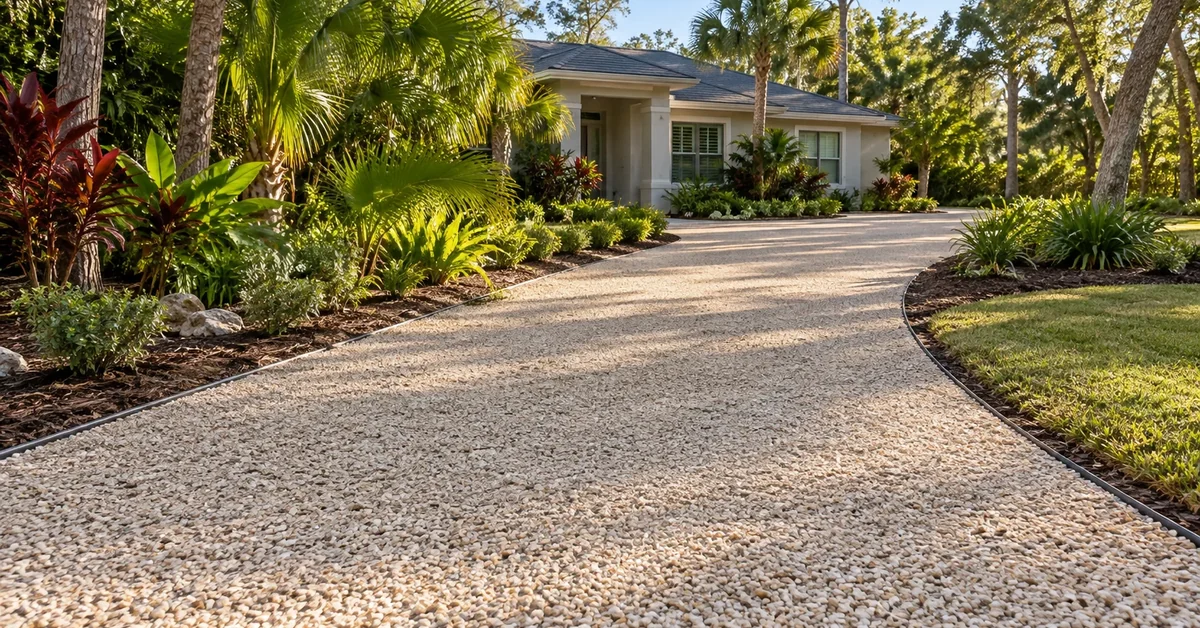
The route also changes how the drive sits in the larger landscape. A new front bed, tree or walkway should not make the entrance harder to use. If those improvements are planned, discuss them with the driveway layout rather than treating the stone as an isolated project. In Parrish and nearby communities, lot layouts vary; the useful plan comes from the actual property, not a stock drawing.
Before work begins, check any applicable neighborhood requirements and ask the appropriate local authority about work at the road connection. Rules depend on the property and scope. A contractor’s estimate should make clear what is included; do not assume that work outside the property or a separate drainage problem is part of the driveway project scope.
What is the ground like under the current drive?
A thin layer of new stone over a soft or rutted track may make it look different without resolving why it moves or holds water. Walk the route and point out low areas, loose edges, existing potholes and places where tires have pushed material aside. If part of the drive is already gravel, identify which sections can stay and which need more preparation.
The amount of traffic matters too. A driveway used by daily vehicles, occasional deliveries and heavier equipment needs a plan for its intended use. The installer should explain the preparation and material in the proposed scope, rather than offering a one-line promise that any gravel will work. Ask where the base will be prepared, how the surface will be shaped, and what happens at the edges.
If the driveway runs beside planting beds or turf, define those transitions before spreading material. A clear edge helps the drive look intentional and keeps the entrance from feeling like a loose patch of stone across the whole front yard.
Where does the rain go now?
Walk the property during or shortly after a heavy rain if you can. Notice whether water crosses the drive, collects at the entrance, heads toward the house or pools along one side. Take a photo or mark the wet spots for the site visit. A dry-day walkthrough alone can miss the condition that matters most once summer storms arrive.
A driveway surface and a drainage plan are related, but they are not the same thing. Gravel is not a cure for every low spot. If runoff is already moving toward a building or standing on the lot, discuss that condition before choosing a finished surface. The right response depends on the grade, available outlets and the rest of the property. Read more about drainage and grading options when water is part of the problem.
The shape of the finished drive should be described in the estimate. Ask how water is intended to leave its surface and where it will go next. The goal is to understand the proposed approach, not to assume that every Florida property can be built the same way.
How will the driveway fit the finished landscape?
The driveway is often the first line a visitor sees. A long gravel approach may lead to a more finished entry near the house, or the whole drive may remain gravel. Plantings, palms and a path to the front door can frame it, provided the layout leaves room for vehicles. A landscape plan can also avoid planting something today that blocks sightlines or turns into an obstacle as it grows.
If you are still deciding between materials, the existing gravel-or-pavers guide compares how each may fit a property. This article is the next step: what to look at on your lot before settling on a design. Landscape Artistry’s hardscaping and gravel driveway work can be discussed alongside the entrance, walkways and surrounding beds.
What should you show at the estimate?
Bring a few photos from a wet day and a dry day. Point out where cars turn, which part of the old surface fails, and whether you plan to add plantings or a walkway. Ask for a scope that identifies the route, preparation, material and any separate water issue. If you have a neighborhood plan or entry requirement, have that available too.
A useful estimate makes the choices visible. It should help you decide what belongs in this driveway project and what may need separate planning. Tell Landscape Artistry about your property to start that conversation in Parrish or a nearby service area.
Common questions
What if delivery vehicles use the driveway? Show the installer where larger vehicles enter and turn. Their route and intended use should be considered when planning the drive width, base and finished surface.
Will gravel stop standing water? Not by itself in every situation. Identify where water comes from and where it can go before treating the surface as the solution.
Should I plan planting beds at the same time? If they border the entrance or route, yes. Coordinating those edges early can make the driveway easier to use and the landscape feel finished.