
A few carefully placed lights and a full-property lighting plan are different projects. The useful first step is deciding which parts of the yard you want to see and use after dark, then working through the installation details for those spaces.
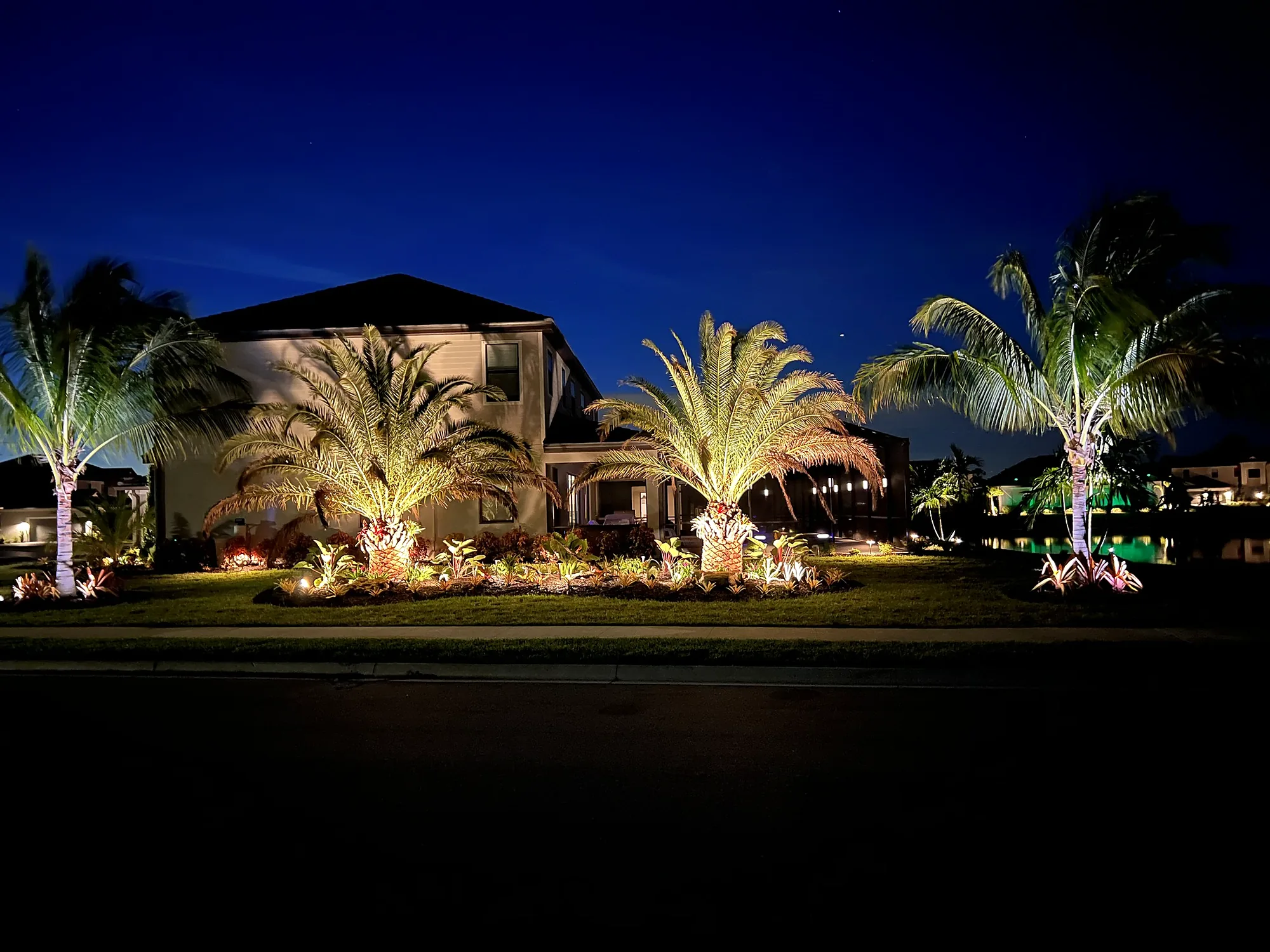
Start With the Spaces You Use
Think about the walk to the front door, the driveway, a patio, or a planting bed you see from inside. Lighting those spaces calls for different placements. A plan for one entry will have a different scope from a plan that covers paths, trees, and outdoor seating.
Bring photos and point out the places that feel too dark or the landscape features you want to see at night. A useful lighting plan starts with those decisions, not a fixed number of fixtures.
What Goes Into the Installation
Fixture selection, placement, wiring routes, access to the planting beds, and controls all affect the work. Existing hardscape and finished beds can make a route more involved than open ground. Materials also vary, so compare an estimate by what is included rather than by fixture count alone.
If lighting is part of a larger landscape installation, plan the paths for wiring alongside the beds and walkways. That keeps the design coordinated.
Make the Estimate Specific to the Property
Ask which areas the proposed layout covers, what equipment is included, and whether any existing surface needs to be worked around. The right scope depends on the yard and what you want to see after sunset. Tell Landscape Artistry about your property to start a quote conversation.